
Aspen has long been one of the world's most coveted mountain destinations, attracting luxury homebuyers, second-home owners, and visitors who value exceptional skiing, outdoor recreation, fine dining, and an elevated mountain lifestyle. But in the summer of 2027, getting here may require more planning than usual.
The Aspen/Pitkin County Airport (ASE) is scheduled to close for runway reconstruction from April 4 through November 19, 2027. For a destination where convenient air travel plays an important role, this extended closure presents both challenges and opportunities for the local real estate market.
There is also some encouraging news for travelers. On October 15, 2026, the Colorado Transportation Commission approved funding to postpone CDOT's planned I-70 Glenwood Canyon Phase 8 project from summer 2027 to 2028. This decision is intended to avoid overlapping two major regional infrastructure projects and help maintain traffic flow while Aspen's airport is closed.
With one significant road construction project now deferred, attention turns to how the airport closure itself may influence buyer activity, rental demand, property values, and investment strategies throughout the Roaring Fork Valley.
Understanding the Aspen Airport Closure
The airport closure is part of a major modernization project designed to improve runway safety and long-term operational reliability. During the closure, both commercial and general aviation operations will be suspended at ASE. The runway is expected to reopen November 19, 2027, while the new passenger terminal is projected for completion in 2029.
For travelers accustomed to flying directly into Aspen, the change will require alternative arrival arrangements.
Nearby airports expected to serve as alternatives include:
Eagle County Regional Airport (EGE): A regional option for travelers who prefer to fly closer to the mountains and arrange ground transportation to Aspen.
Grand Junction Regional Airport (GJT): An alternative for visitors approaching from the west.
Denver International Airport (DEN): Offers extensive flight options, with a longer drive to the Roaring Fork Valley.
Montrose Regional Airport (MTJ): Another option for travelers willing to coordinate additional ground transportation.
Eagle County Regional Airport is particularly important to the region's contingency planning, with United and American Airlines adding flight options to help accommodate the shift in travel demand.
For visitors, the biggest adjustment may be the additional coordination required. For real estate owners, the question is whether that inconvenience will change the decision to visit, rent, or purchase a property in Aspen and Snowmass Village.
How the Closure Could Affect Luxury Vacation Rentals
Luxury vacation rentals may feel the effects of the airport closure more directly than properties occupied primarily by full-time residents. However, the impact will likely vary by property, guest profile, length of stay, and pricing strategy.
Booking patterns may change
Some visitors may reconsider short, spontaneous trips if reaching Aspen requires an additional flight connection or a longer drive. This could be especially relevant for two- or three-night stays, quick business trips, and brief summer getaways.
Other visitors may be less sensitive to the change. Families planning weeklong vacations, repeat guests with established Aspen traditions, and travelers seeking extended summer stays are more willing to adjust their transportation plans.
Rather than assuming demand will decline across the board, property owners should anticipate a possible shift in the types of guests booking and the length of their visits.
Longer stays could present an opportunity
One strategy for property managers is to position homes for longer stays. Guests facing additional travel time and expense may find a weeklong or multiweek rental more appealing than a short visit.
Owners and managers can consider:
Promoting weekly and extended-stay opportunities where permitted.
Highlighting private amenities, outdoor living spaces, home offices, and family-friendly features.
Providing clear information about alternative airports and transportation options.
Offering flexible arrival arrangements and booking policies where financially practical.
Emphasizing the complete Aspen lifestyle rather than relying solely on convenience.
Will rental rates decline?
It is too early to predict a specific change in occupancy, nightly rates, or rental revenue. Some properties may experience softer demand, while others may maintain strong bookings because of their location, amenities, established clientele, or distinctive appeal.
The best approach is to monitor booking pace, cancellations, guest inquiries, and comparable rental performance as the season approaches. Owners should make pricing adjustments based on actual market signals rather than reacting to uncertainty alone.
What the I-70 Construction Postponement Means for Aspen
The October 15 announcement that CDOT is postponing the I-70 Glenwood Canyon Phase 8 project until 2028 is a welcome development for the Roaring Fork Valley.
Originally planned for summer 2027, the project will be deferred for one construction season to avoid compounding travel disruptions during the Aspen airport closure.CDOT cited the importance of maintaining traffic flow, supporting regional businesses, and coordinating major infrastructure projects.
This is particularly relevant because many travelers will rely on Eagle County Regional Airport or drive from Denver while Aspen's airport is closed.
For vacation rental owners, this is an encouraging development. More predictable access through Glenwood Canyon may help visitors feel more comfortable making travel arrangements and keeping their Aspen vacation plans.
For buyers and sellers, it is a reminder that transportation access matters to a destination market and that regional coordination can make a meaningful difference to the visitor experience.
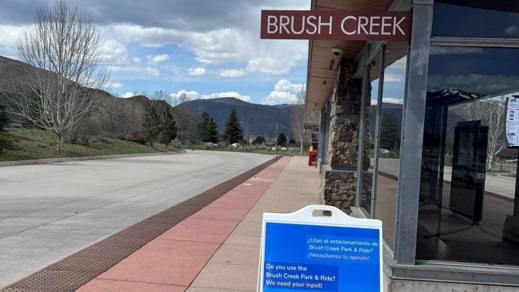
A New Temp Rental Car Hub at Brush Creek
To help accommodate travelers during the airport closure, a temporary rental car facility is planned for Lot A at the Brush Creek Park-and-Ride, located approximately six miles from Aspen and five miles from Snowmass Village. The site is expected to provide an off-airport location for rental car operations while the airport terminal and rental car areas are inaccessible during construction.
The Brush Creek location also offers access to local public transportation, providing an important connection for visitors traveling between the valley's communities. For vacation rental guests, second-home owners, and property managers, this temporary arrangement may help simplify ground transportation once visitors arrive in the area.
Seamless Transit from Eagle: $69 Scheduled Shuttle Service
To ensure effortless access to the valley while ASE is closed, Wildpath Transportation is launching the EGE Line—a dedicated shuttle connecting Eagle County Regional Airport with the Aspen/Snowmass area for $69 each way.
Subsidized by local partners like Aspen One and Pitkin County, the service runs six daily trips to Eagle and eight to Aspen, timed specifically around United’s nine daily flights and American’s seven daily flights into EGE. Vans make scheduled stops in Glenwood Springs, Basalt, and the Brush Creek Intercept Lot, where guests connect to the on-demand Valley Loop shuttle for direct drop-offs in Aspen and Snowmass Village.
Each $69 ticket includes one carry-on and one 50-lb checked bag (including ski or snowboard bags), and reservations can be booked directly through Wildpath’s website, app, or by phone.
The Bigger Picture: $1.4 Billion of Capital Investment Underway
The airport closure is not a standalone disruption. It is one piece of the largest concentration of capital investment the upper valley has ever seen. Most of it running on the same timeline, and nearly all of it completing within roughly the same window.
Aspen
Aspen/Pitkin County Airport — $575 million (2027–2029): Full runway reconstruction to current FAA standards, with a new ~130,000-square-foot terminal breaking ground in November 2027 and completing in 2029.
Lift One Corridor / New Base of Ajax — approximately $350 million (2026–2029): Lift 1A replaced with a modern high-speed lift loading farther downhill, two new lodging projects, and the restored and relocated Skier’s Chalet Lodge and Steakhouse. Chalet Alpina, the corridor’s first phase, carries private investment projected north of $199 million.
The Lumberyard — $360 million (2026–2029): 277 workforce housing units, the largest affordable housing project the city has built. Construction began this spring.
Armory Hall — $53.7 million (2026–2028): One of Aspen’s oldest civic buildings reborn as an 18,000-square-foot community gathering space.
Snowmass Village
The Draw Site — $75 million (beginning September 2026): 66 workforce housing units just above Town Hall.
Brush Creek–Owl Creek Roundabout — $8.5 million (completing 2026): Regrading and smoothing one of the valley’s most frustrating intersections.
The Ritz-Carlton — 167 hotel rooms (~2031): A Sketch Plan to reimagine the Viewline, the Conference Center and Wildwood Lodge, with 61 fractional residences and 125 workforce housing units. Still working through the town’s process.
Stratos — Base Village’s final residential chapter (targeted 2027): 75 families already in place, with move-ins beginning this ski season.
Taken together, the projects with published budgets represent roughly $1.4 billion of committed investment across Aspen and Snowmass Village.
What this means for value
Capital of this magnitude does not flow into places where confidence is temporary. Each of these projects reflects a long-term commitment to the valley by the public and private sectors alike, and they address exactly the constraints buyers raise most often: air access, lift infrastructure at the base of Aspen Mountain, workforce housing, and the condition of the civic core.
None of this guarantees appreciation. Property values here will continue to turn on inventory, broader economic conditions, and the merits of the individual property. But a buyer weighing one disrupted summer against that backdrop is weighing a temporary inconvenience against durable structural improvement, and that is a different calculation than the headlines suggest.
Will Aspen Property Values Be Affected?
For prospective buyers and sellers, the central question is whether reduced convenience will translate into lower property values.
The most reasonable answer is that the airport closure could influence short-term buyer sentiment and transaction activity, but it does not automatically mean property values will decline.
Real estate performance depends on numerous factors, including inventory, interest rates, economic conditions, property characteristics, and buyer demand. Temporary transportation access is another consideration, particularly in a market where many owners and visitors travel from out of state.
Luxury second-home buyers
Some buyers may delay a purchase until the airport reopens, particularly if they plan to visit frequently during the summer and fall of 2027. Others may proceed with their plans, recognizing that the closure is temporary and that the property will remain part of their long-term lifestyle or investment strategy.
For buyers focused on long-term ownership, factors such as location, views, privacy, architectural quality, ski access, and proximity to downtown Aspen may carry greater weight than a single season of transportation challenges.
Sellers: Positioning and preparation matter
Sellers should be prepared to answer questions about alternative transportation, seasonal access, ownership expenses, and rental performance.
For investment properties, realistic rental projections and transparent operating expenses will be particularly important. Historical peak-season rental figures should not be presented as a guarantee of future income.
Opportunities throughout the Roaring Fork Valley
Aspen, Snowmass Village, Basalt, and Carbondale each offer distinct property types, price points, and lifestyle advantages. Buyers may weigh these communities differently depending on their intended use, travel habits, and investment goals.
However, there is not yet sufficient evidence to conclude that the airport closure will produce a measurable price shift or a significant migration of buyers toward down-valley communities since many already rely on Eagle Airport regardless of the Aspen Airport closure.
Local market data and property-specific analysis will be essential to understanding any emerging trends.
Strategies for Buyers, Sellers, and Property Owners
The best response to an unusual year is preparation rather than speculation.
For buyers
Evaluate properties according to long-term goals rather than a single year's travel disruptions.
Review rental history and test income assumptions carefully.
Consider how frequently you expect to visit and which alternative airports best serve your travel patterns.
Take into account what the property will be valued at after all the major capital improvements are complete and Aspen has a state of the art airport for the next century to come.
For sellers
Highlight distinctive property features and the experiences that make the home desirable across all seasons and have a pre-inspection prepared ahead of time to get any repairs done.
Work with your real estate advisor to establish pricing based on current comparable sales and buyer activity.
Consider your timing and what the value of the property will be after the completion of the airport project, with the potential for more direct flights and buyer pools.
For vacation rental owners
Monitor booking pace, cancellation terms, and pricing regularly.
Communicate airport alternatives and ground transportation options clearly.
Consider longer stays and flexible arrival arrangements where feasible.
Maintain a financial cushion for potential booking volatility.
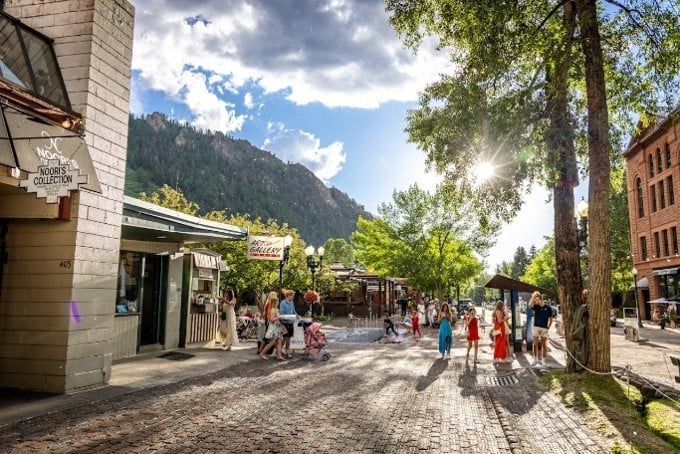
Why Aspen's Long-Term Appeal Still Matters
Despite the transportation changes anticipated in 2027, Aspen's appeal extends far beyond convenient air travel.
The region offers an exceptional combination of internationally recognized skiing, outdoor recreation, cultural events, fine dining, and highly desirable real estate. For many second-home owners, the value of ownership is measured not only in rental revenue or resale appreciation, but also in personal use, family traditions, and the “Mind, Body, Spirit” lifestyle that the Roaring Fork Valley provides.
The airport modernization project is a long-term investment in safety and operational reliability. When the runway reopens in November 2027, commercial operations will resume in the existing terminal while the new terminal remains under construction.
Meanwhile, the decision to postpone the Glenwood Canyon project until 2028 demonstrates an effort to coordinate regional infrastructure improvements and reduce overlapping disruptions during a critical travel season.
These developments put 2027's challenges into perspective. The airport closure may affect individual travel plans and rental performance, but it does not diminish the qualities that make Aspen a sought-after destination.
The Bottom Line: A Year to Plan Carefully, Not Panic
The Aspen airport closure will make 2027 an unusual year for real estate and luxury vacation rentals throughout Aspen, Snowmass Village, and the greater Roaring Fork Valley.
Rental owners may need to adapt pricing, booking strategies, and guest communication. Buyers may ask more questions about access and investment performance, while sellers may need to provide greater clarity around ownership costs and rental history.
The postponement of I-70 Glenwood Canyon construction until 2028 is a positive development, reducing the prospect of two major transportation disruptions occurring simultaneously.
Still, the effects of the airport closure will not be uniform. Property location, quality, pricing, intended use, and financial flexibility will all matter.
For buyers, sellers, and investors, the most effective strategy is to stay informed, plan alternative travel arrangements, and make real estate decisions based on property-specific data rather than assumptions about the market as a whole.
In a destination market like Aspen, the ability to adapt to a temporary challenge may be just as important as recognizing the enduring value of an exceptional property.
Helpful Resources
Aspen/Pitkin County Airport — 2027 Closure Information
Aspen/Pitkin County Airport — Runway Reconstruction FAQs
CDOT — October 15 Announcement Postponing Glenwood Canyon Phase 8 Until 2028


